
Description
| Product: | Glassy carbon electrode / counter electrode |
| Material: |
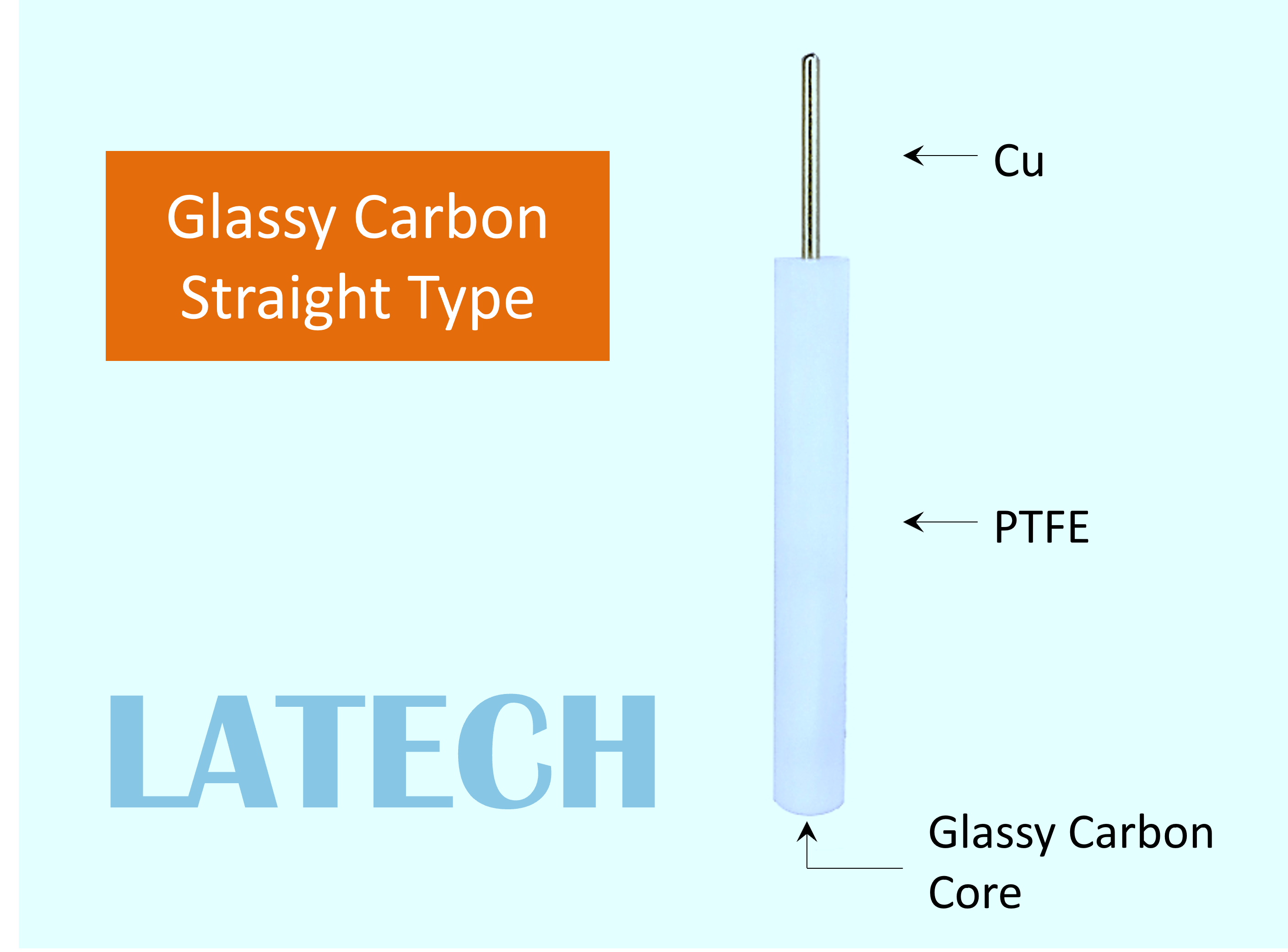
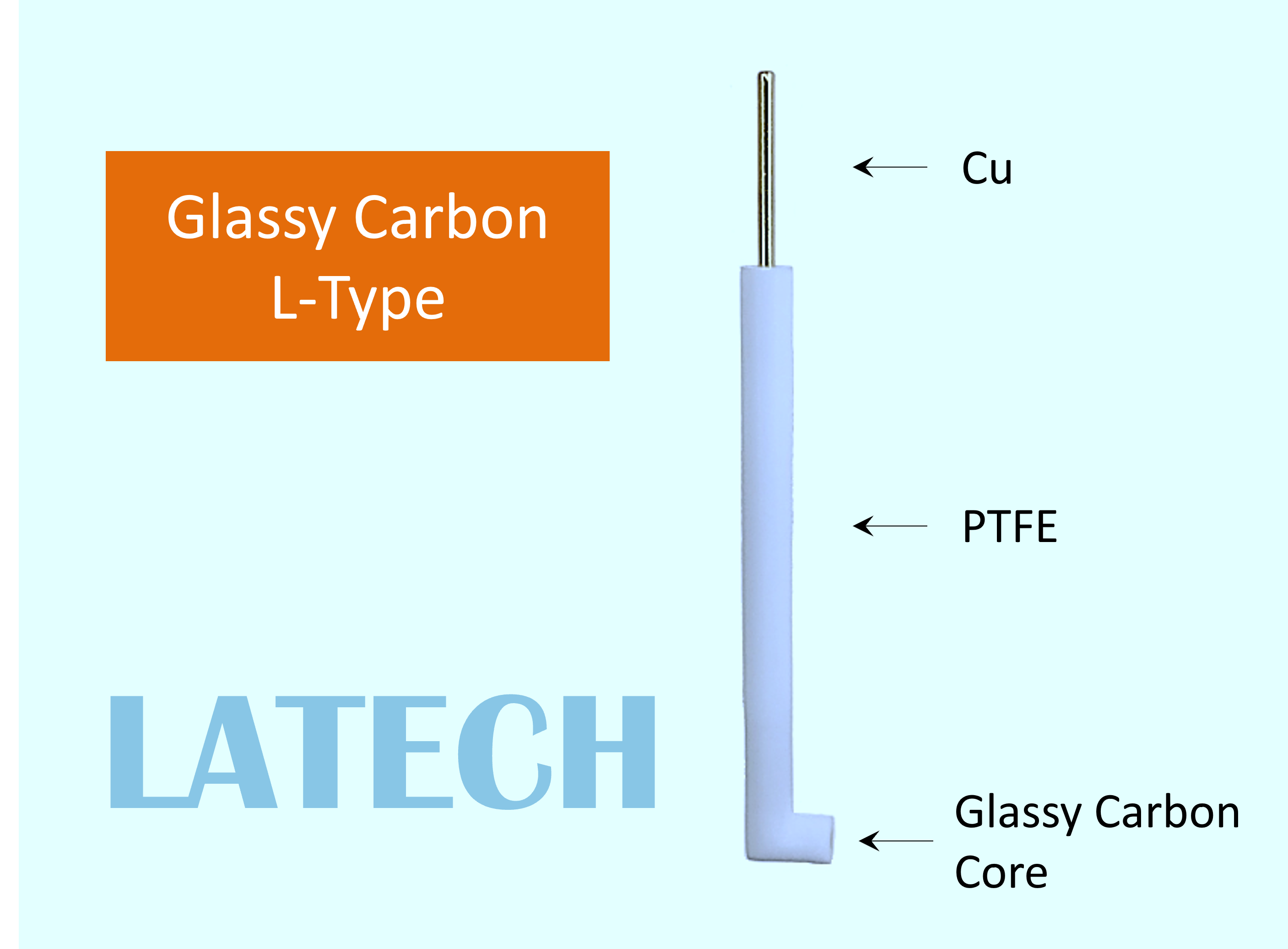
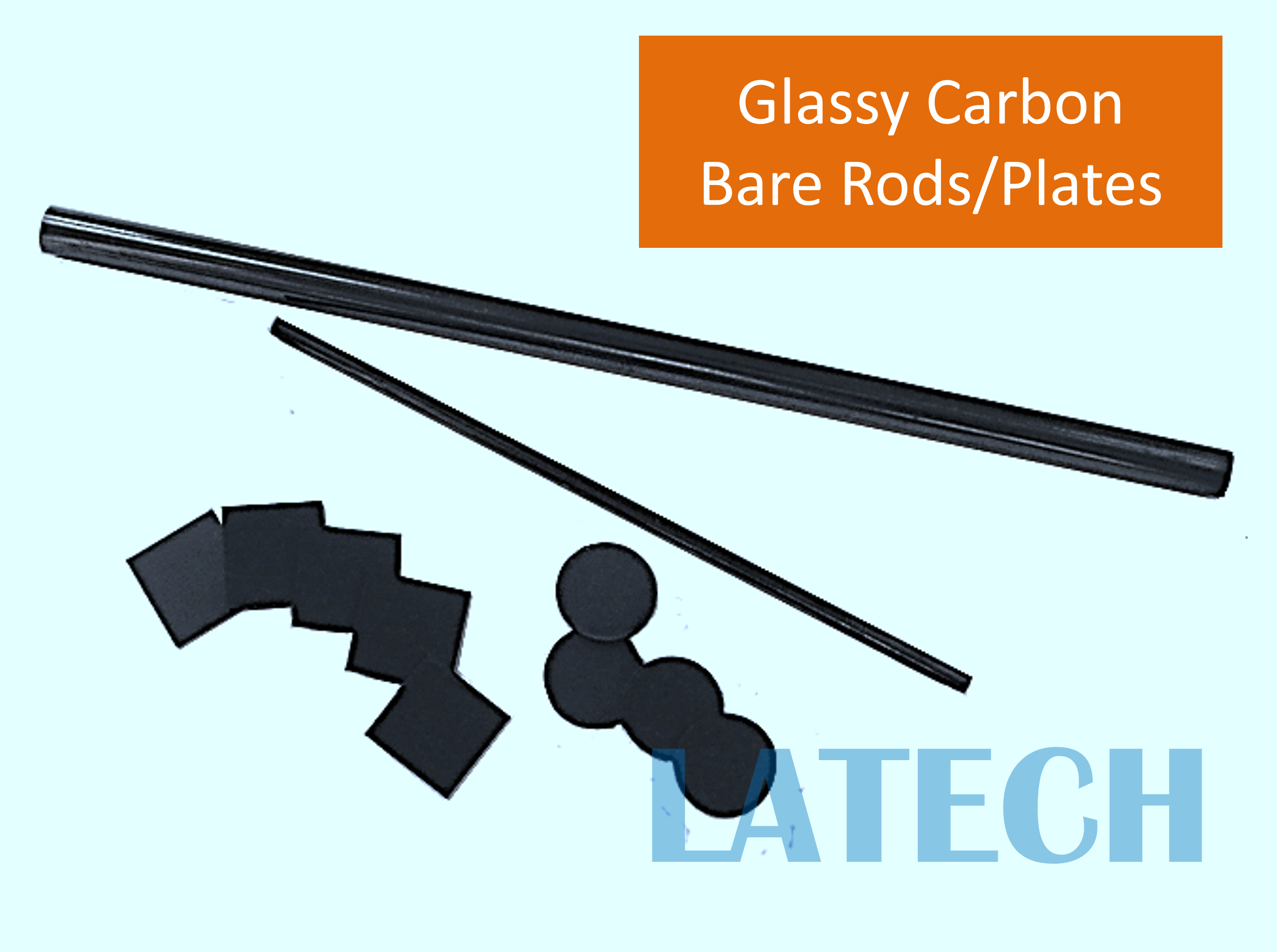
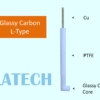
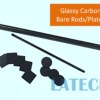
Model 1: Straight type • Metal Core: glassy carbon • Insulating Shell: PTFE, PEEK, PVDF, PCTFE Model 2: L-type • Metal Core: glassy carbon • Insulating Shell: PTFE, PEEK, PVDF, PCTFE Model 3: Bare Electrodes • Glassy carbon rod • Glassy carbon plates |
| Comments: |
Metal electrodes of many other materials available HERE. |
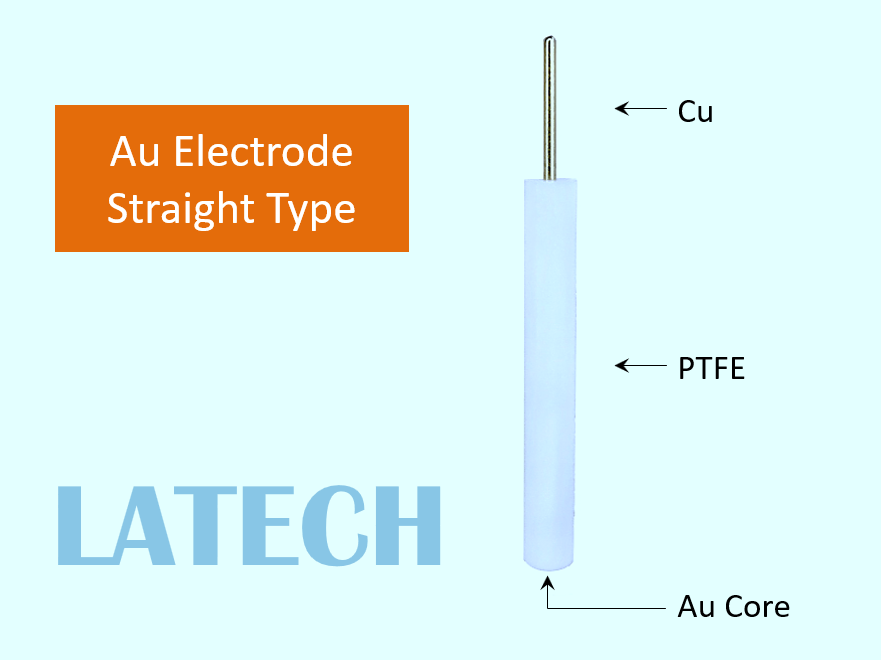
Product number and corresponding sizes for 【Straight Type】
Overall size: Cu connect (Dia 2*20 mm) + PTFE shell/Glassy carbon core (Length 60/80/100 mm, Diameter see below)
Note: Thickness of PTFE shell is typically 1.5-3 mm.
|
Product Number |
Diameter of Glassy Carbon (Φ, mm) |
|
GC110 |
1 |
|
GC120 |
2 |
|
GC130 |
3 |
|
GC140 |
4 |
|
GC150 |
5 |
|
GC160 |
6 |
|
GC370 |
7 |
|
GC380 |
8 |
|
GC390 |
9 |
|
GC310 |
10 |
|
GC315 |
15 |
|
GC321 |
20 |
Product number and corresponding sizes for 【L-Type】
Overall size: Cu connect (Dia 2*20 mm) + PTFE shell/Glassy carbon core (Length 80 mm, Diameter see below).
Note: Thickness of PTFE shell is typically 1.5-3 mm.
|
Product Number |
Diameter of Glassy Carbon (Φ, mm) |
|
L-GC110 |
1 |
|
L-GC120 |
2 |
|
L-GC130 |
3 |
|
L-GC140 |
4 |
|
L-GC150 |
5 |
|
L-GC160 |
6 |
|
L-GC370 |
7 |
|
L-GC380 |
8 |
|
L-GC390 |
9 |
|
L-GC310 |
10 |
|
L-GC315 |
15 |
|
L-GC321 |
20 |
Product number and corresponding sizes for 【Bare Rods/Plates】
- For glassy carbon rods: typical diamter 1-6 mm, length customized
- For glassy carbon plates: typical thickness 1-3 mm, size customized
|
Product Number |
Diameter of Glassy Carbon (Φ, mm) |
|
GC0101 |
10×10×1 |
|
GC0102 |
10×10×1 |
|
GC0103 |
10×10×1 |
Electrode treatment and maintenance
The surface of glassy carbon is easily polluted by some organic metal compounds, which seriously affects the measurement (no peak, no miscellaneous peak, no recurrence), it must be cleaned before measurement.
There are three main methods, one is by chemical method: Nitric acid soaking and scrubbing. The second method is Ammonia water anhydrous ethanol or ethyl acetate (1:1) soak and scrub. The third method is using alcohol after scrubbing and then with 6NHCl or 4NHO3 Soak.
Electrochemical treatment: i.e.+0.8V-(-1.8V (0.5MKcLPH7exceptO2IRepeated Polarization (Reset) in Voltage Range-Scanning (Anode)-If the cathode is seriously polluted and pitted, scratches can be treated mechanically. MgO Powder (200 Put it on wet velvet cloth and polish it with a little water. Also Several methods are combined according to the condition of electrodes. It is not advisable to immerse the electrode in strong acid, alkali, and organic solvents for a long time.
Related Products
Cu Foil
Energy storage
Consumables
High purity, ultra-flat, oxidation and oil free, fabricated for battery electrodes


Pt Plate Electrode
Energy storage
Working/Counter Electrodes
Special design with full protection, Pt plate of difference size options

Connection Wires with Banana Plugs
Energy storage
Consumables
Variable lengths with two standard banana plugs (dia. 4 mm)