
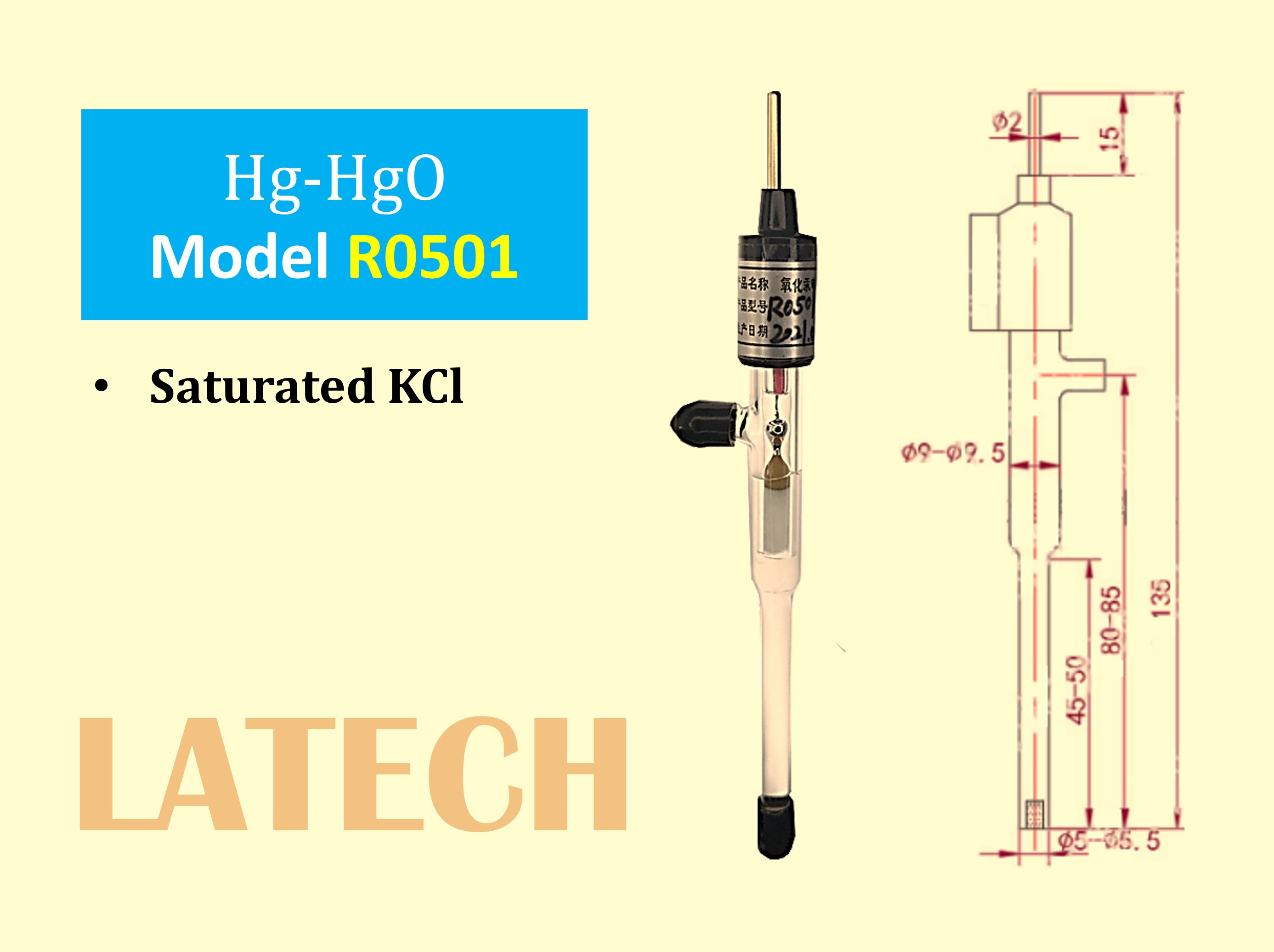
Description
Manual
|
Model |
R0501 |
|
Materials |
Mercuric Oxide , Hg/HgO/OH (KOHa = 1) |
|
Produce feature |
Mercuric Oxide Electrode |
|
Reference solution in the first salt bridge |
Saturated KCl solution |
|
Electrode Potential |
0.098 |
|
Temperature coefficient / Mv |
-1.12 |
|
General purpose |
Alkaline medium |
|
Product Size |
See the details in the followed parameter descriptions |
Mercury Oxide Electrode Manual
Purpose
This electrode can be used as a reference electrode in conjunction with pH meters, ion meters, potentiometric titrators, and electrochemical workstations. It has good potential reproducibility and is particularly suitable for potential measurements in alkaline solutions.
Main Technical Parameters
- Electrode internal resistance: ≤10KΩ
- Standard potential at 25°C: 0.098V
- Salt bridge solution: 1.0 mol/L KOH
- Liquid junction flow rate: ≥1 drop/10 minutes
- Electrode operating temperature: ≤40°C, room temperature
Usage, Maintenance, and Precautions
- Before use, remove the electrode cap at the bottom end of the electrode. It is recommended to also remove the side cap at the top of the electrode to prevent a pressure difference between the inside and outside of the electrode, which could cause the liquid junction at the bottom to flow too quickly. If removing only the bottom cap causes the electrode to leak too quickly, remove the top side cap and let it sit for a moment to resolve the issue.
- There should be no air bubbles in the electrode’s internal salt bridge solution, as they can block the measurement circuit or cause abnormal or unstable readings. If air bubbles are present, hold the electrode upright and tap it lightly to make the bubbles rise.
- During measurements, ensure the salt bridge solution level inside the electrode is higher than the test solution to prevent reverse infiltration, which could change the concentration or composition of the salt bridge solution.
- The electrode should not be used in media that react with the salt bridge solution, especially those that form precipitates, as this could block the micropores of the liquid junction and render the electrode unusable. If using other concentrations of KOH or reactive media is unavoidable, it is recommended to add a salt bridge between the electrode and the test solution as a barrier.
- If the test solution contains 3 mol/L or more KOH, it may affect the electrode’s lifespan. In this case, it is recommended to add a salt bridge as a barrier between the electrode and the test solution.
- The interior of the electrode should be cleaned regularly, and the salt bridge solution should be replaced periodically. For general contamination, clean the electrode promptly to maintain the proper function of the liquid junction. When replacing the salt bridge solution, remove the rubber cap from the injection port at the top of the electrode. Use a syringe to extract the old solution and gently inject the new solution to avoid damaging the internal electrode core.
- Mercury oxide inside the electrode is toxic, and the KOH salt bridge solution is corrosive. Follow laboratory safety protocols when handling these materials.
- When removing the electrode cap, avoid exposing the electrode to air for extended periods (more than a few minutes), as the solution inside the glass tube may leak or evaporate, which could affect the electrode’s performance. If the electrode is not used for a short period, immerse the liquid junction in 1.0 mol/L KOH for storage. For long-term storage, replace the salt bridge solution with fresh 1.0 mol/L KOH, seal the electrode, and store it in a dark place.
- The reference electrode has a limited potential range. Avoid applying excessive current or voltage. Exceeding the range may result in discoloration or detachment of the mercury core inside the electrode.
- Do not clean the electrode using ultrasonic methods.
- The salt bridge solution for this electrode is 1 mol/L KOH. If you need to change the solution, note that the electrode potential may change due to the different concentration and composition of the solution, and it could also shorten the electrode’s lifespan.
- The electrode is made of glass and is fragile. If you find any damage, such as broken or cracked glass, or if the mercury core is loose or detached, please contact us within 48 hours of receiving the product.
- The electrode core is made of mercury and mercury compounds. Even if unused, long-term storage may cause the electrode to fail, which can manifest as inaccurate potential readings or cloudy internal reference solution.
- For electrodes that have been stored for a long time (but still within their service period), it is recommended to replace the salt bridge solution and allow the electrode to sit for more than 4 hours before use.
- Do not attempt to disassemble the electrode. Once disassembled, it cannot be restored.
Related Products

Coin Cell Cases
Energy storage
Consumables
Full set of components, different models, for energy storage research

Pt Wire Electrode
Energy storage
Working/Counter Electrodes
Economic choice, counter electrodes in electrochemical testing

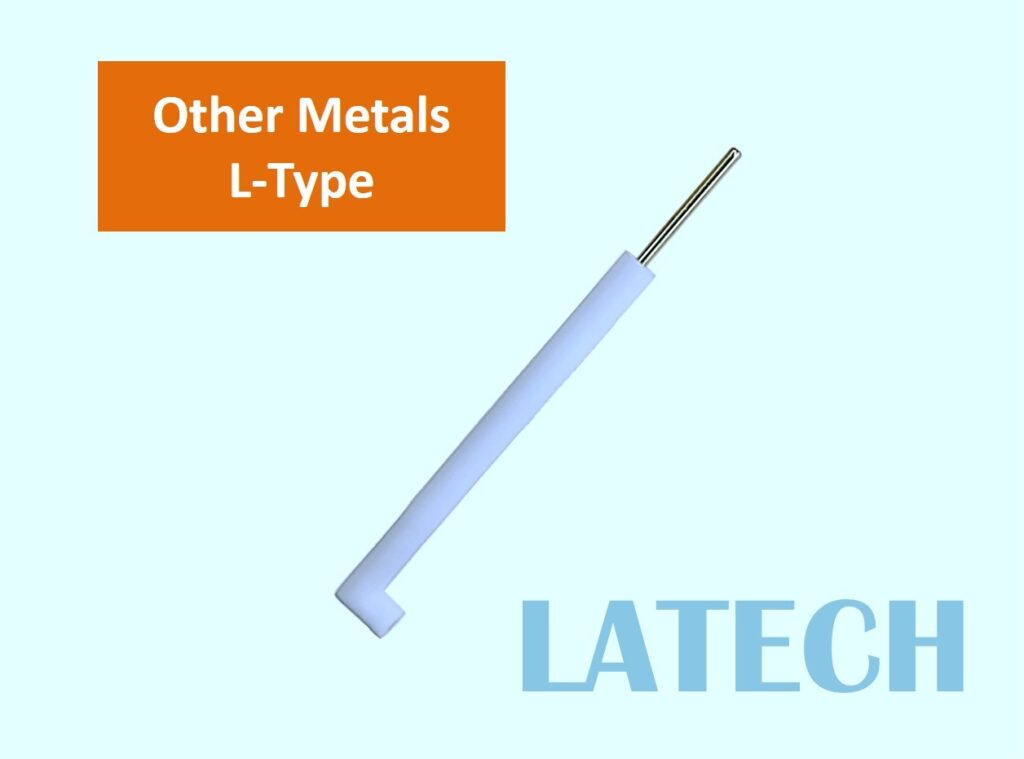
Multi-Component Metal Electrodes
Energy storage
Working/Counter Electrodes
Metal electrodes with selected metal components