



Description
Manual
Dimension
Warranty
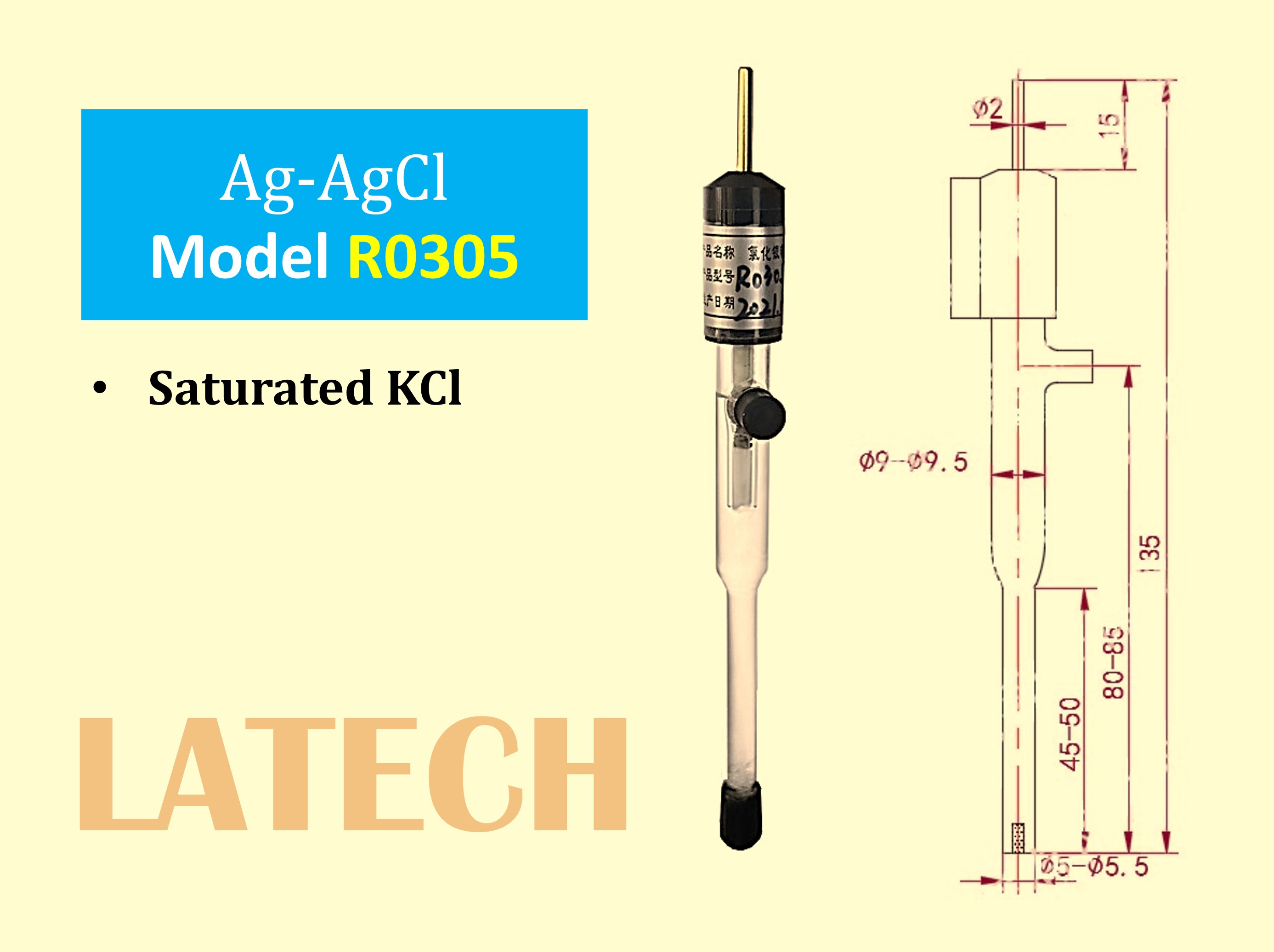
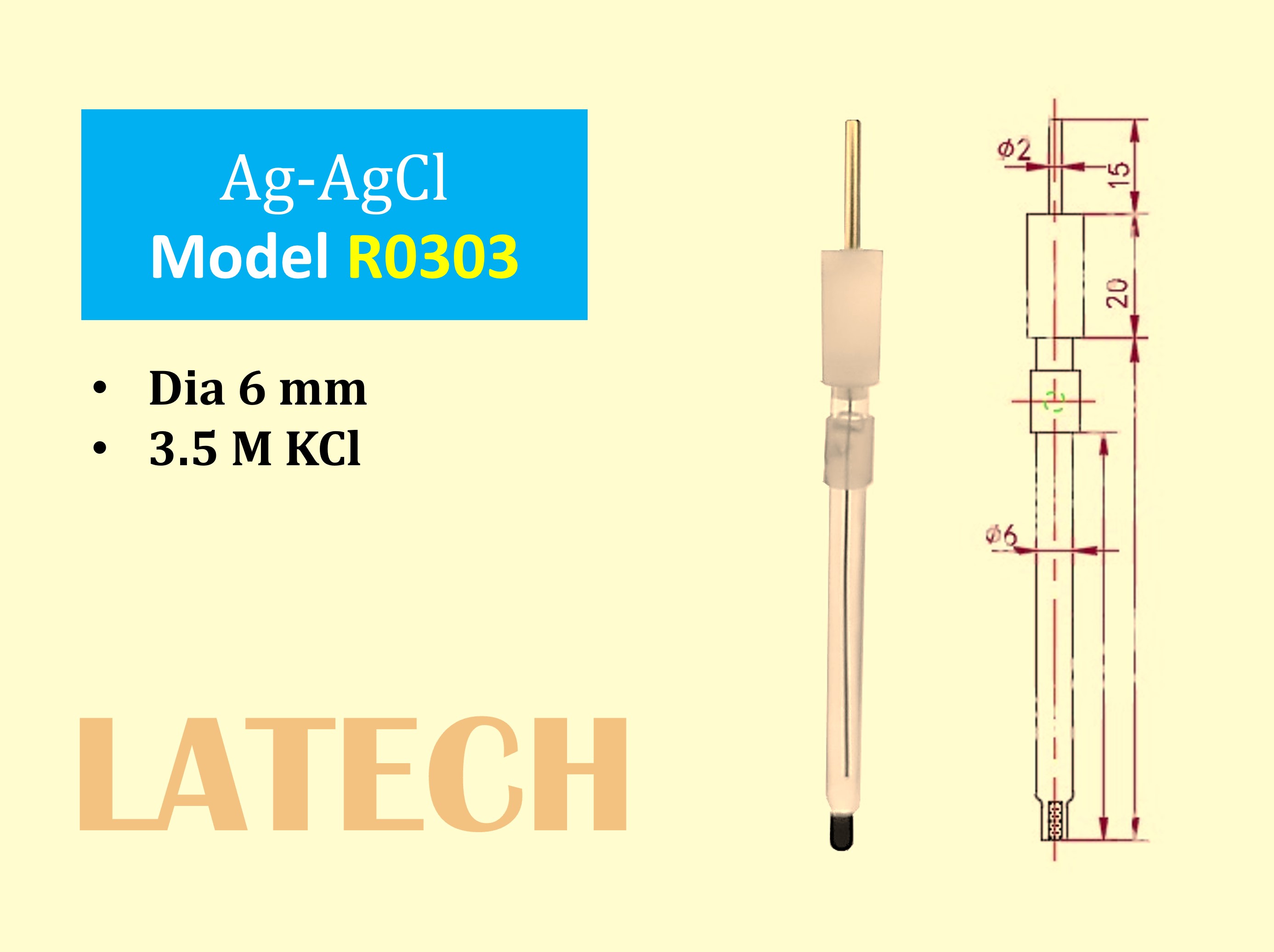
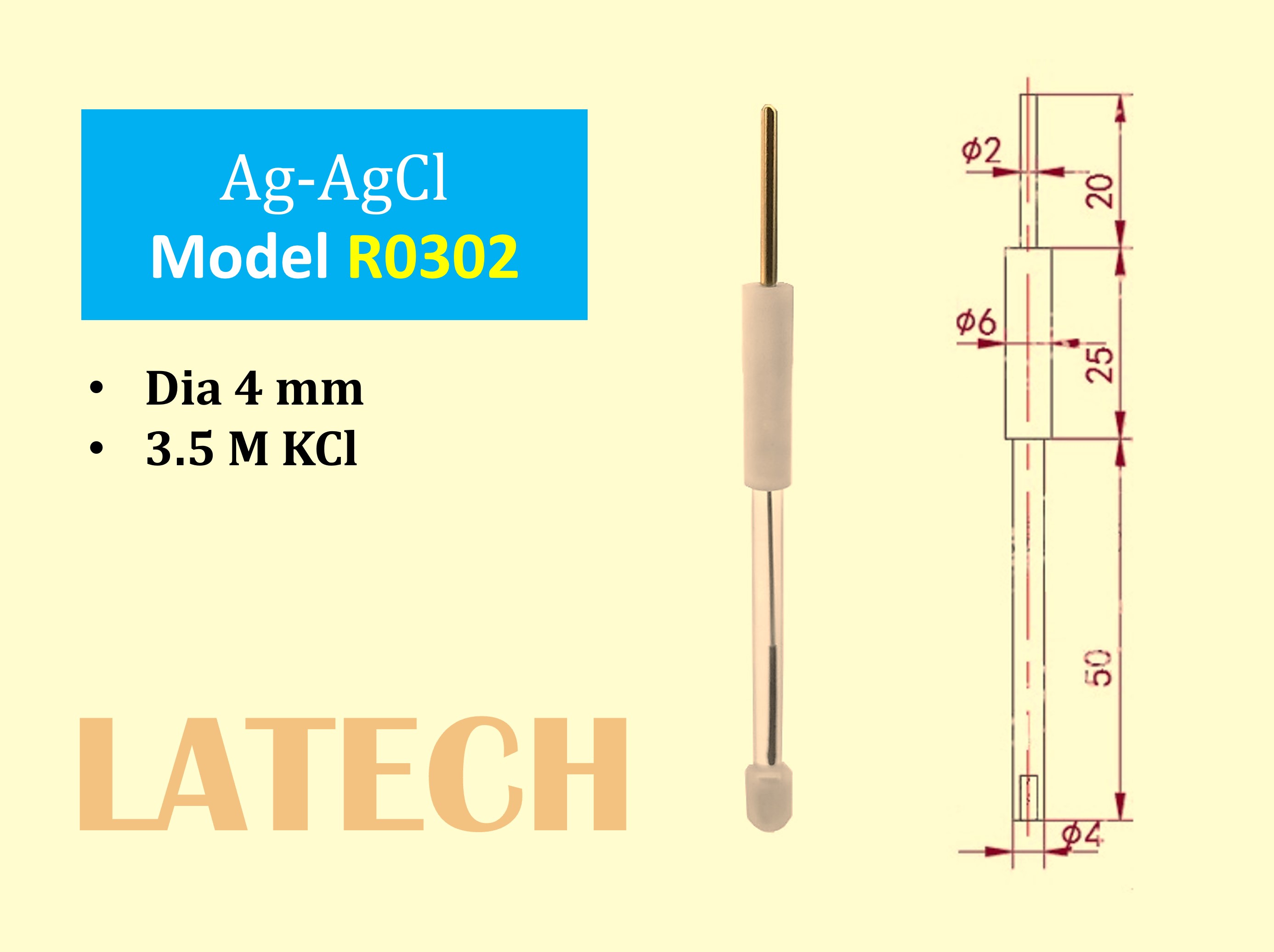
We have 5 types of Ag-AgCl reference electrodes available.
|
Model Number |
Electrolyte Solution |
Electrode Diameter |
|
R0302 |
3.5 M KCl |
4 mm |
|
R0303 |
3.5 M KCl |
6 mm |
|
R0305 |
Saturated KCl |
9 mm & 5 mm |
|
R0201 |
Non-aquesous |
6 mm |
|
R0202 |
Non-aquesous |
4 mm |
The standard electrode potential of Ag-AgCl electrode is /V (to NHE).
|
Temperature / ℃ |
3.5 M KCl solution |
Saturated KCl solution |
|
10 |
0.2152 |
0.2138 |
|
15 |
0.2117 |
0.2089 |
|
20 |
0.2082 |
0.2040 |
|
25 |
0.2046 |
0.1989 |
|
30 |
0.2009 |
0.1939 |
|
35 |
0.1971 |
0.1887 |
|
40 |
0.1933 |
0.1835 |
Note:
(1) Thepotential value of each electrode means the relative potential value to the standard hydrogen electrode at 25 ℃.
(2) The temperature coefficient was the electrode potential change with each temperature change of 1 ℃.
Instructions for the Use of Ag/AgCl Reference Electrode
- Technical Data:
- Electrode internal resistance: ≤10KΩ
- Liquid junction flow rate: ≥ 10 minutes/1 drop
- The electrode is constructed with solid AgCl immersed in a solution containing Cl–, represented as Cl–(xmol·L-1)|AgCl, Ag, with the electrode reaction: AgCl + e–→Ag + Cl–.
|
Model Number |
Electrolyte Solution |
Electrolyte Potential |
Operating Temperature |
|
R0302 |
3.5 M/KCl |
0.2046 V (vs. NHE) |
≤40°C |
|
R0303 |
3.5 M/KCl |
0.2046 V (vs. NHE) |
≤60°C |
|
R0305 |
Saturated KCl |
0.1989 V (vs. NHE) |
≤60°C |
- Maintenance and Precautions for Use
- Before using the electrode, please remove the electrode cap at the bottom of the electrode. When removing the electrode cap of the R0305 reference electrode, it is recommended to simultaneously remove the cap on the upper end of the electrode to prevent excessive liquid flow at the bottom of the electrode due to pressure difference inside and outside the electrode. If excessive liquid leakage occurs when removing only the electrode cap at the bottom, please promptly remove the cap on the upper end of the electrode, and let it stand for a moment to improve the situation.
- It is normal for a small amount of salt crystals to be present around the outer wall of the glass tube. This is due to slow leakage of KCl solution from the glass tube. Simply rinse with water to remove them; it does not affect the normal use of the electrode.
- The chambers of R0302 and R0303 reference electrodes are filled with a 3.5M KCl solution. You can also fill them with saturated KCl solution.
- The salt bridge solution inside the electrode should be free of air bubbles to prevent interruption of the measurement circuit or abnormal test curves. If there are any air bubbles present, you can tilt the electrode upright and lightly tap it with your finger to make the bubbles rise to the surface.
- During measurements, please ensure that the salt bridge solution inside the electrode is kept higher than the test solution to prevent reverse osmosis of the test solution, which could alter the concentration or composition of the salt bridge solution.
- The electrode should not be used for measuring media that react with the salt bridge solution, especially those that form precipitates, which can block the micropores of the liquid junction and render the electrode unusable. When used in solutions containing chloride ions, interference from trace amounts of oxygen in acidic solutions may occur; in precise operations, it is advisable to use inert gas protection. When HNO3 or Br–, I–, NH4+, CN– are present in the solution, the electrode should not be applied. If it is unavoidable, it is recommended to add a salt bridge between the electrode and the test solution to block the reaction.
- The electrolyte inside the electrode can be replenished. Please check the solution level. If the solution level is too low, you can refill it with the appropriate concentration of KCl solution. When refilling the R0302 reference electrode with solution, carefully and slowly remove the white polytetrafluoroethylene cap (to prevent scratching or dislodging the silver chloride), use a syringe to inject the solution into the glass tube, and then slowly insert the glass tube into the white polytetrafluoroethylene cap. There is a small hole in the polytetrafluoroethylene cap, and if too much solution is injected, a small amount may leak out. Simply rinse with water to clean it, which does not affect usage. When refilling the R0303 reference electrode with solution, remove the rubber tube in the middle of the electrode to expose a small hole, then use a syringe to inject the solution into the glass tube through the small hole. When refilling the R0305 reference electrode with solution, first remove the rubber cap on the liquid injection port on the upper part of the electrode. Use a syringe to withdraw the original salt bridge solution, then inject the new solution. Be careful and gentle during this process to avoid damaging the electrode’s core with the syringe needle.
- The interior of the electrode should be regularly cleaned, and the salt bridge solution should be replaced periodically. Any general adhesion or contamination should be promptly removed to maintain the normal operation of the liquid junction.
- When removing the electrode cap, avoid exposing the electrode to air for an extended period (several minutes). Otherwise, the solution in the glass tube may leak and evaporate, potentially affecting electrode performance. If the electrode is not in use for a short period, immerse the liquid junction of the electrode in a KCl medium for storage. If the electrode is not in use for an extended period, replace the salt bridge with fresh KCl and seal it in a light-proof container for storage.
- The applicable range of potential for reference electrodes is limited. Care should be taken to avoid using excessively high currents or voltages. The potential range of the electrode varies depending on the specific type and design.
- Please note to regularly replace the reference solution and clean the interior walls of the electrode.
- The electrode should not be cleaned under ultrasound.
Related Products

Coin Cell Cases
Energy storage
Consumables
Full set of components, different models, for energy storage research


Pt Wire Electrode
Energy storage
Working/Counter Electrodes
Economic choice, counter electrodes in electrochemical testing

Glassy Carbon Electrodes
Energy storage
Working/Counter Electrodes
Glassy carbon rod in protected shell for electrochemical testings
Various Metal Electrodes
Energy storage
Working/Counter Electrodes
Metal electrodes of various metals available